Design & Inspiration
Landscape Lighting Design Tips for a Warm, High-End Look
7 min read
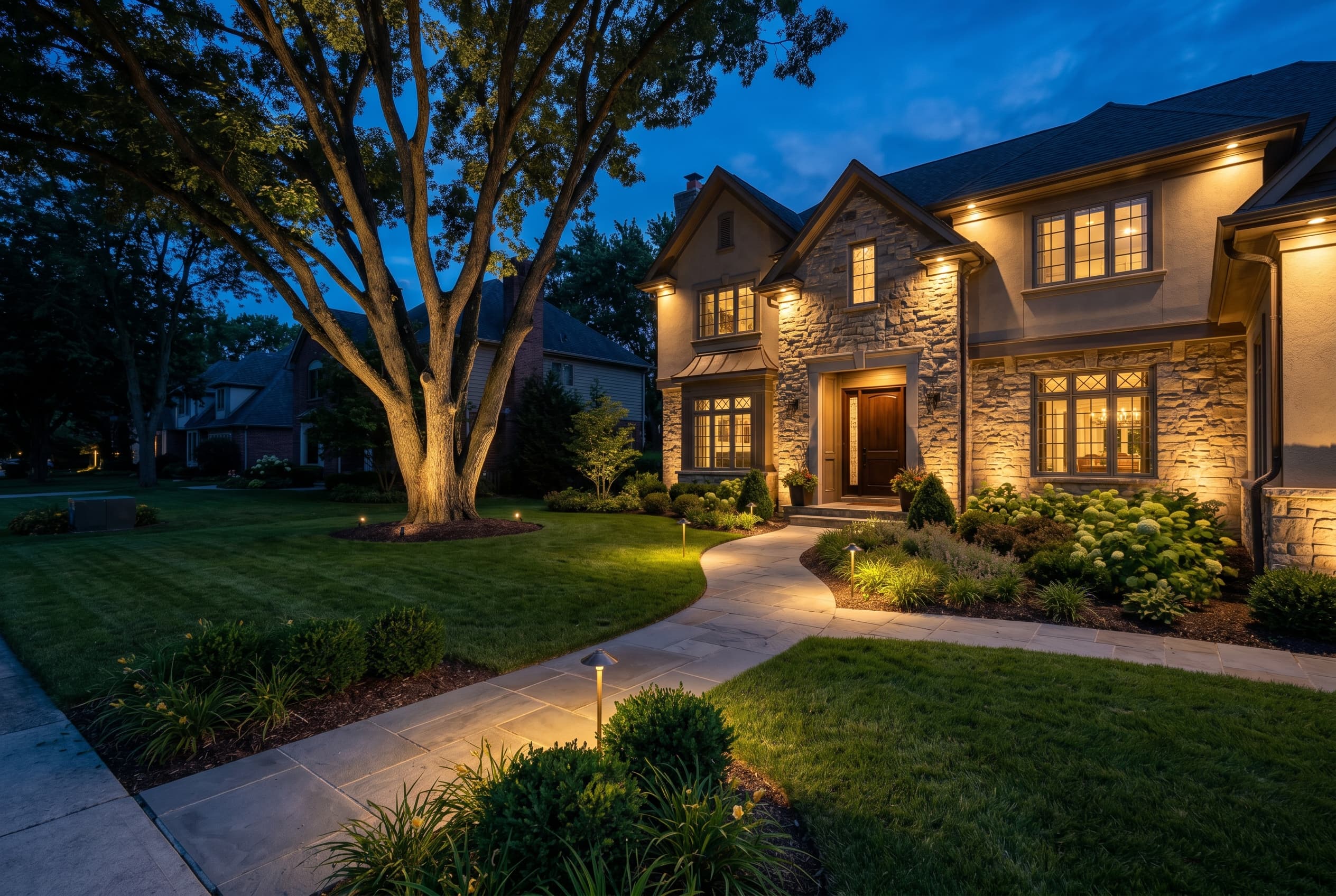
The best landscape lighting does not scream for attention. It quietly improves how a home feels after dark.
A strong design starts by deciding what deserves attention, where the eye should travel, and how much light is actually needed. That is what separates a warm, layered look from a harsh one.
Quick answer
If you focus on a few key features, use layered light, and stay restrained with brightness, the final result will look far more expensive than a yard filled with random fixtures.
Start with focal points, not fixtures
Homeowners often start shopping for path lights, spotlights, and transformers before they know what the lighting is supposed to accomplish. That is backwards.
Start by identifying the few elements worth highlighting first: the front entry, a great tree, stonework, architectural texture, or a walkway that needs better definition.
- Front door and entry path
- Specimen trees or layered plantings
- Columns, stone, or unique architectural lines
- Areas where safety matters at night
Use layers instead of one uniform brightness level
High-end lighting design usually combines several types of light. Path lights define movement. Uplights create drama. Soft wash lighting gives surfaces shape. Accent lighting adds interest.
When every area is the same brightness, the yard looks flat. Layering creates contrast, and contrast is what makes a property look sophisticated after dark.
Deeper reference
Keep the full homeowner guide on hand.
The book goes deeper on fixture selection, transformer sizing, wiring, voltage drop, automation, and building a landscape lighting plan from the first sketch through the final night look.
Aim for warmth and restraint
Outdoor lighting looks best when it feels warm and controlled. In most residential settings, a softer color temperature and lower output produce a more inviting result.
If a fixture is bright enough to dominate the entire scene, it is probably too bright. The goal is atmosphere, not interrogation-room visibility.
Think about the view from inside the house
A strong exterior lighting plan should work both from the street and from inside the home. At night, windows become frames. Good lighting gives the homeowner something beautiful to look at from indoors.
That means you are not just lighting landscape beds. You are composing nighttime views.
Next steps
If this page answered the first question, these are the next pages worth opening.