Design & Inspiration
How to Uplight Trees Without Overdoing It
6 min read
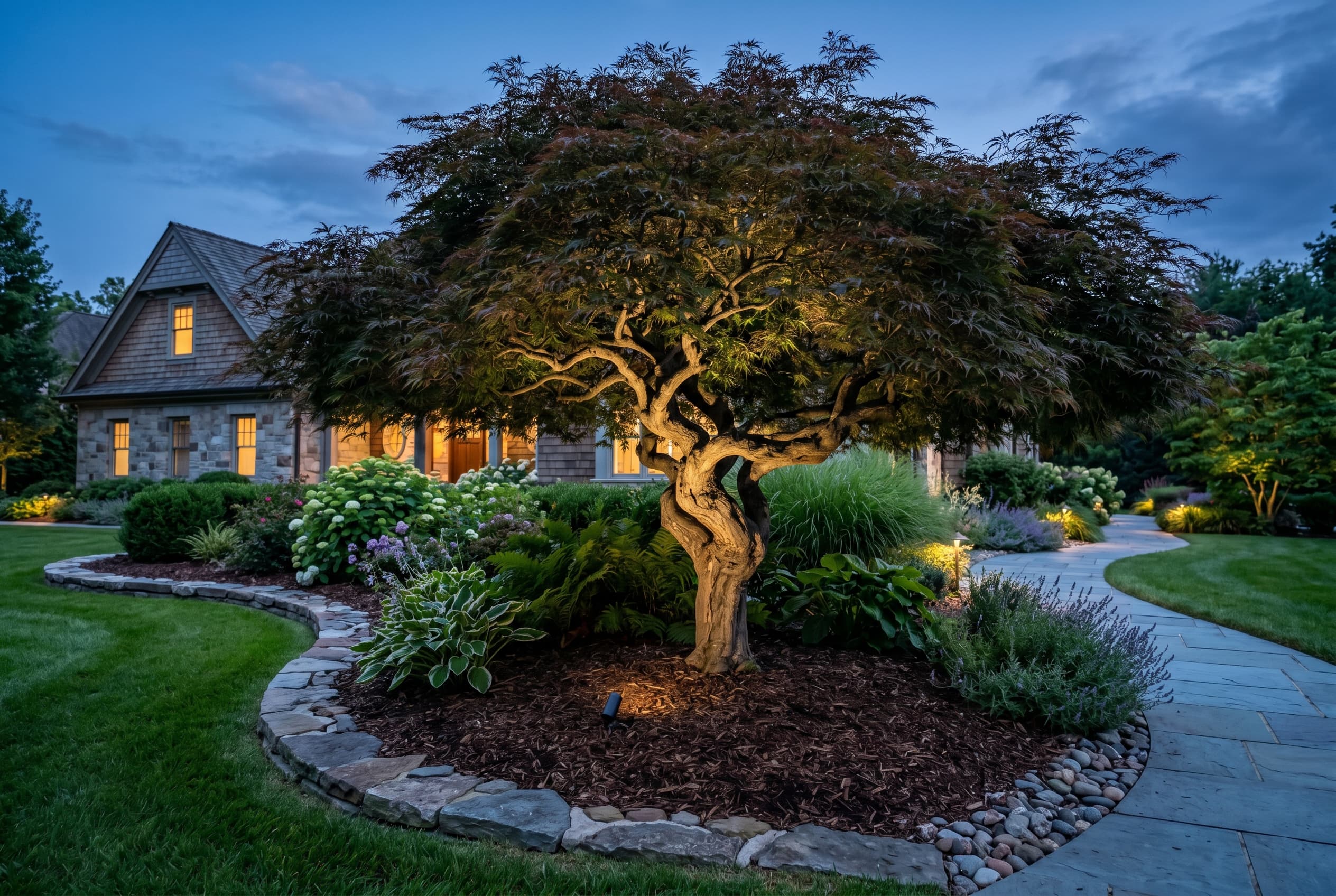
Trees are some of the best landscape lighting focal points because they add height, texture, and movement. They also create drama in a way that low fixtures alone cannot.
The problem is that tree uplighting is easy to overdo. A great tree can go from elegant to theatrical very quickly.
Quick answer
The most effective tree uplighting reveals shape and texture while keeping the source discreet and the brightness under control.
Match the beam to the tree, not the other way around
A narrow, concentrated beam may work for a slim trunk or a very specific feature. A broad canopy often needs a wider spread or multiple lower-output fixtures.
The lighting should support the shape of the tree. If the beam pattern fights the structure, the effect looks awkward immediately.
Avoid hotspotting the trunk
One of the most common mistakes is blasting the base of the trunk so brightly that it becomes the only thing people notice. That usually feels accidental and harsh.
In many cases, it is better to pull the fixture back, soften the intensity, or use multiple subtle angles rather than one aggressive shot upward.
Deeper reference
Keep the full homeowner guide on hand.
The book goes deeper on fixture selection, transformer sizing, wiring, voltage drop, automation, and building a landscape lighting plan from the first sketch through the final night look.
Use trees to create layers deeper into the yard
A lit tree in the distance gives the yard depth. It draws the eye past the immediate foreground and helps the entire property feel larger and more composed.
That is part of why tree lighting is so powerful when used strategically.
Remember glare matters as much as the tree
A tree can look great from one angle and terrible from another if the fixture is exposed to the eye. The goal is to hide the source and showcase the result.
Whenever possible, position the light so the viewer sees illumination on the tree, not the raw beam from the fixture itself.
Next steps
If this page answered the first question, these are the next pages worth opening.