Technical / Buying Guidance
How to Size a Landscape Lighting Transformer Without Guessing
8 min read
Transformer sizing is where a lot of otherwise solid landscape lighting plans go sideways. Homeowners often either undersize the transformer or buy a much larger unit without understanding why.
The good news is that the math is not difficult. Once you total your fixture load and leave realistic headroom, the right transformer size becomes much easier to choose.
Quick answer
The right transformer is based on actual fixture load plus headroom, with zoning and wire-run planning baked into the decision.
Start by adding the fixture wattage on the circuit
The foundation is simple: add up the wattage of every fixture that will run from the transformer. If you have ten 5-watt fixtures, that is a 50-watt connected load.
The mistake is stopping there. A transformer should not be selected at exactly the same wattage as the connected fixture load.
Leave usable headroom instead of maxing it out
A good rule for many residential systems is to leave meaningful reserve capacity. That gives you room for voltage fluctuations, future fixture additions, and a system that does not feel over-stressed.
In practical terms, many homeowners feel better when the calculated load lands somewhere below the transformer's full rating rather than right on top of it.
- Total fixture wattage first
- Add safety headroom rather than sizing to the exact number
- Think ahead if the owner may add lights later
Deeper reference
Keep the full homeowner guide on hand.
The book goes deeper on fixture selection, transformer sizing, wiring, voltage drop, automation, and building a landscape lighting plan from the first sketch through the final night look.
Think in zones, not just one giant total
If the front yard, side yard, and backyard all behave differently, it helps to think about them as separate loads even if one transformer handles them. That makes troubleshooting and expansion easier later.
This is one reason multi-tap and multi-zone transformer setups can make sense in larger residential projects.
Do not ignore wire run realities
Transformer size is only part of the story. Long wire runs and too many fixtures on one cable path can still create disappointing results, even if the transformer wattage looks fine on paper.
That is why sizing, zoning, and voltage-drop planning should be considered together rather than as separate decisions.
Next steps
If this page answered the first question, these are the next pages worth opening.
Landscape Lighting Transformer Sizing Chart
Use the chart if you want a quicker reference version of the same decision.
Landscape Lighting Transformer Planner
Move into the planner when you want to estimate zones, reserve capacity, and run distance together.
How Many Landscape Lights Can You Put on One Transformer?
Use the fixture-count guide when you want to translate transformer size into a more practical zone-by-zone load conversation.
Frequently asked questions
How much headroom should I leave on a landscape lighting transformer?
The exact number varies, but the practical goal is to avoid matching transformer size to fixture load too tightly. Meaningful reserve capacity gives you room for additions, layout adjustments, and a less stressed system.
Should I size a landscape lighting transformer by fixture count alone?
No. Fixture count can mislead you because different fixtures use different wattages. The better method is total connected wattage, then review zones and wire-run realities before finalizing the transformer.
Do long wire runs affect transformer choice?
Yes, but usually through layout and voltage-drop planning rather than transformer wattage alone. A transformer can be large enough on paper and still underperform if the run layout is poor.
Recommended products
Amazon picks that fit this guide
These are starter products tied to the decision this page is helping with. Shorter, lighter runs usually stay in 12/2 territory. As distance and load climb, 14/2 can be a reasonable step before you move into heavier cable.
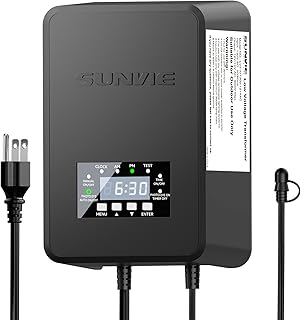
SUNVIE 200W Landscape Lighting Transformer with Timer and Photocell
A practical mid-size transformer pick for homeowners moving beyond a small path run and wanting built-in timer and dusk-to-dawn control.
View 200W transformer
DEWENWILS 300W Wi-Fi Low Voltage Landscape Transformer, 3 Zones
A larger-capacity option for bigger front-yard plus side-yard layouts where separate zones and more headroom start to matter.
View 300W transformer
Gardner Bender GET-3202 Low Voltage Tester
A simple low-voltage tester that helps homeowners verify whether the plan on paper is translating into usable voltage at the fixtures.
View low-voltage testerDisclosure: As an Amazon Associate, this site may earn from qualifying purchases at no extra cost to you.