Technical / Buying Guidance
Landscape Lighting Voltage Drop Explained for Homeowners
7 min read
Voltage drop sounds technical, but the yard-level symptom is simple: the lights at the far end of the run look weaker than the ones closer to the transformer.
In residential systems, that usually shows up when runs are too long, cable is undersized, or too many fixtures are stacked onto one path.

Quick answer
Voltage drop is usually a layout-and-load problem, not just a fixture problem, so solve it at the planning stage.
What voltage drop looks like in the yard
The most obvious sign is uneven brightness. Fixtures closer to the transformer may look stronger while distant ones feel weaker or less consistent.
That kind of unevenness can make an otherwise good design feel cheap.
Distance and load both matter
Longer wire runs increase resistance, and higher connected load increases the demand on the run. Put those together and the last fixtures on the line can suffer.
That is why cable strategy matters just as much as fixture selection.
Deeper reference
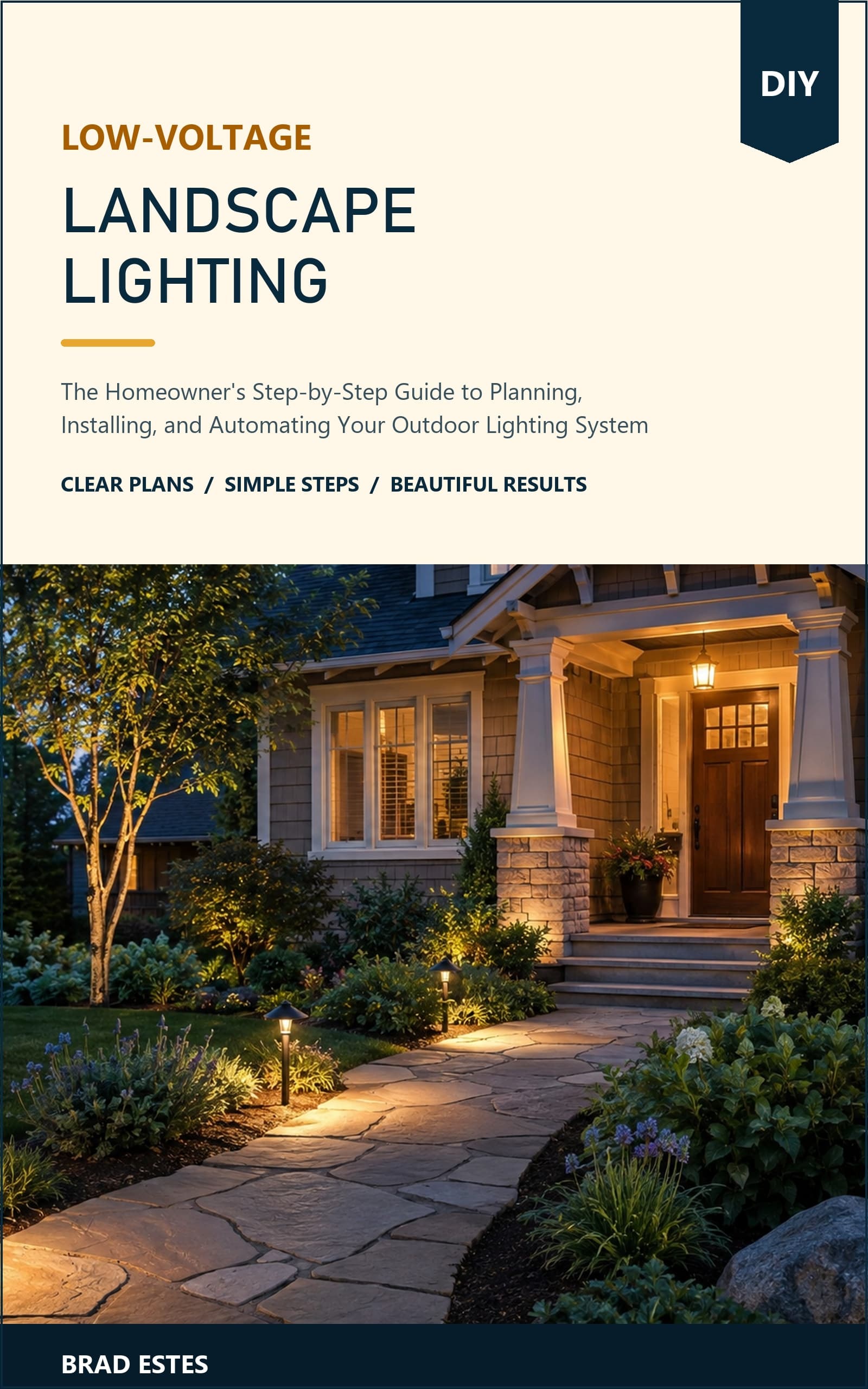
Keep the full homeowner guide on hand.
The book goes deeper on fixture selection, transformer sizing, wiring, voltage drop, automation, and building a landscape lighting plan from the first sketch through the final night look.
Layout can solve problems before they start
A cleaner layout might mean splitting a long run into shorter branches, changing cable gauge, or rethinking which fixtures share a line.
Good planning prevents the classic outcome where the first half of the system looks great and the far end looks disappointing.
Transformer sizing and voltage drop are connected
A properly sized transformer helps, but it does not automatically solve bad layout decisions. That is why transformer selection should be paired with realistic run planning.
Homeowners get better results when they think about load, headroom, and wire path together.
Next steps
If this page answered the first question, these are the next pages worth opening.
Frequently asked questions
How much voltage drop is too much for landscape lighting?
There is no single universal cutoff for every fixture, but once the run is losing enough voltage that the far fixtures look noticeably dimmer or weaker, the layout needs attention. Homeowners usually get better results by correcting the run before the loss becomes visible in the yard.
Does heavier wire reduce voltage drop?
Yes. A heavier cable gauge reduces resistance and usually helps longer runs hold voltage more effectively, especially when the load is meaningful.
Can a larger transformer fix voltage drop by itself?
Not usually. Voltage drop is often a run-length, wire-size, and layout issue, so increasing transformer size alone may not solve the real problem.
Recommended products
Amazon picks that fit this guide
These are starter products tied to the decision this page is helping with. Use the guide's planning advice and the product specifications together before you buy.

SUNVIE 14/2 Low Voltage Landscape Wire, 100 FT
A sensible draft pick when the run is pushing past easy 12/2 territory and you want more protection against dimmer far-end fixtures.
View 14/2 wire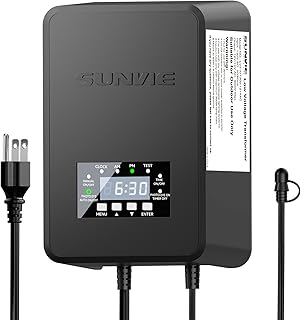
SUNVIE 200W Landscape Lighting Transformer with Timer and Photocell
A transformer option that fits many mid-size residential systems where load planning and wire-run quality both need to stay in the same conversation.
View 200W transformer
Gardner Bender GET-3202 Low Voltage Tester
A low-voltage tester that gives homeowners a simple way to confirm whether the far end of the run is still seeing healthy power.
View low-voltage testerDisclosure: As an Amazon Associate, this site may earn from qualifying purchases at no extra cost to you.