Design & Inspiration
Backyard Patio Lighting Ideas for a Warm, Usable Outdoor Space
13 min read
A backyard patio does not need to be bright to be useful. It needs enough light to make the space feel comfortable, safe, and finished after sunset.
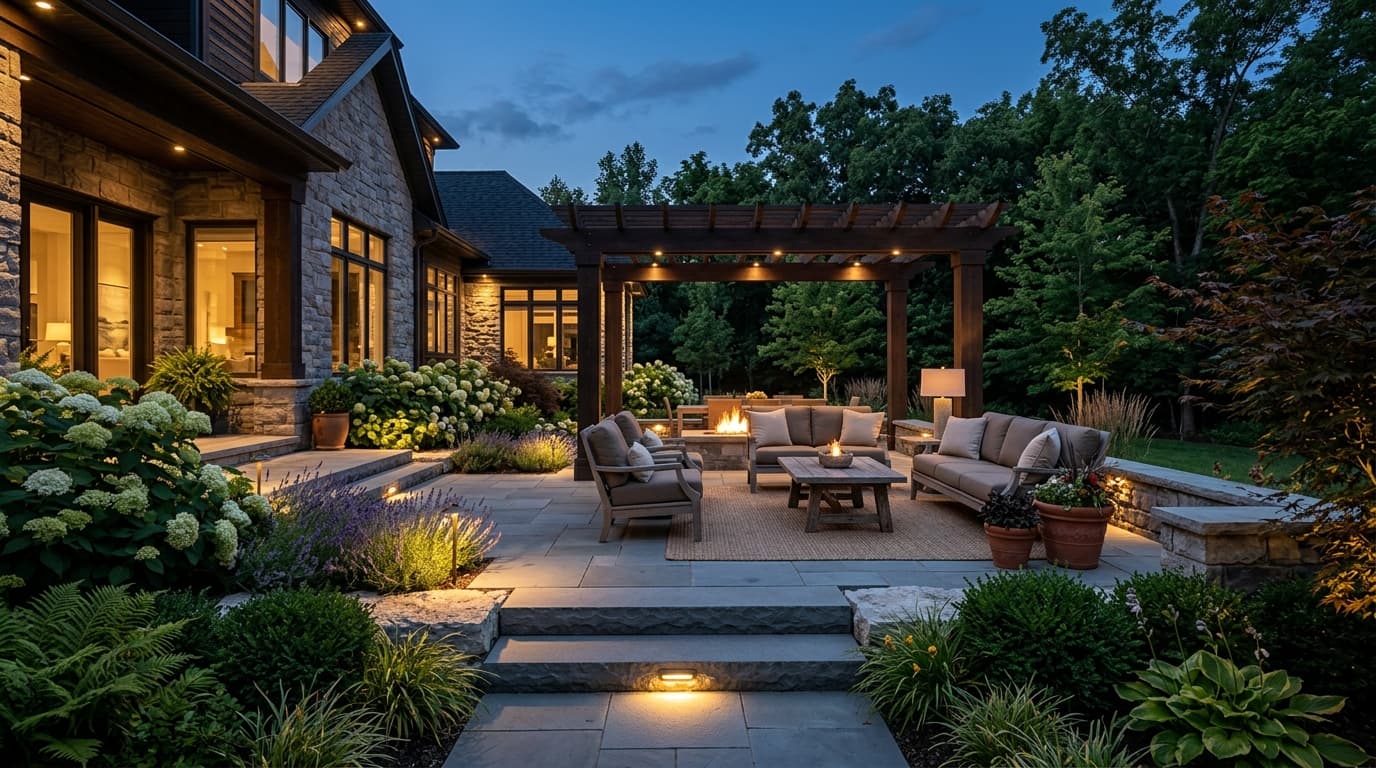
The best patio lighting usually combines several quiet layers: a little light for movement, a little light for the seating zone, and a little depth around the edges so the patio does not feel like a dark island.
If you want the complete planning framework beyond these examples, the landscape lighting book walks through layout, fixture placement, wiring, voltage drop, and smart controls in one homeowner-friendly sequence.
Quick answer
A good patio lighting plan starts with how the space is used, then adds warm layers for seating, movement, edges, and depth without creating glare.
Start with the way people actually use the patio
Before choosing fixtures, think through the evening use case. Is the patio mostly for dinner, quiet seating, grilling, or walking between the house and yard? Each use needs a slightly different lighting plan.
A dining area may need soft overhead or nearby downlighting. A conversation area often looks better with lower ambient light and warm accents around the perimeter.
For a grill zone, task lighting matters more than atmosphere for a few minutes at a time. For a lounge area, comfort matters more than raw brightness. Separating those needs keeps the lighting from becoming one big, flat wash.
- Where people sit
- Where people walk
- Where food or drinks are served
- Where steps or edges need visual definition
Build the plan in layers instead of one bright solution
Most disappointing patio lighting comes from trying to solve everything with one fixture type. A wall floodlight may technically make the area visible, but it usually creates glare, hard shadows, and a less premium feel.
Think in layers: low path lighting for movement, subtle step lighting for transitions, warm accents for planting beds, and very controlled task light where people actually need to see what they are doing.
Layering also lets you dim or switch zones separately later. That matters because the right light level for cleanup is not the same as the right light level for sitting outside with friends.
Deeper reference
Keep the full homeowner guide on hand.
The book goes deeper on fixture selection, transformer sizing, wiring, voltage drop, automation, and building a landscape lighting plan from the first sketch through the final night look.
Light the edges so the patio feels larger
If only the patio surface is lit, the yard beyond it can disappear into darkness. That makes the space feel smaller and less inviting.
A few low-output accents on shrubs, small trees, walls, or planting beds can extend the visual boundary of the patio and make the whole backyard feel more intentional.
This is one of the easiest ways to make a modest patio feel more expensive. You are not lighting every plant. You are giving the eye a few warm points of depth so the outdoor room has shape.
Keep glare away from seating areas
Glare is especially noticeable when people are sitting still. A fixture that seems fine while walking past it can become annoying when it points toward a chair, sofa, or dining seat.
Aim fixtures across surfaces, down toward steps, or into planting areas rather than back toward faces.
A simple test is to sit in the main chairs after dark and look around at eye level. If you see bright diodes or bare bulbs, the fixture probably needs to be shielded, moved, dimmed, or aimed differently.
Use step and transition lighting only where it earns its place
Patio steps, level changes, and edges deserve special attention because they affect safety. But that does not mean every edge needs a row of bright fixtures.
The goal is to reveal changes in elevation with warm, controlled light so movement feels natural after dark.
Place light where someone makes a decision: a stair start, a landing, a change from patio to path, or the point where the patio meets the lawn. Those locations usually matter more than perfectly even spacing.
Make the patio feel connected to the house
The best backyard lighting plans do not treat the patio as separate from the home. They consider doors, windows, rooflines, walls, and the view from inside.
When the patio lighting works from both outdoors and indoors, the space feels more finished and valuable.
Look from the kitchen, living room, and bedroom windows before finalizing fixture placement. At night, those windows frame the backyard. A few warm layers outside can make the home feel larger even when no one is outside.
Choose warm color temperature and modest output
Backyard patios usually look best around warm white color temperatures, often in the 2700K to 3000K range. Cooler light can make stone, plants, and skin tones feel harsh in a relaxing outdoor space.
Brightness should be modest and spread across multiple controlled sources. Several low-output fixtures normally feel better than one high-output fixture trying to cover the whole patio.
If the system supports dimming or smart control, set one scene for entertaining, one brighter scene for cleanup, and one very low scene for late-night ambience.
Next steps
If this page answered the first question, these are the next pages worth opening.