Planning & Layout
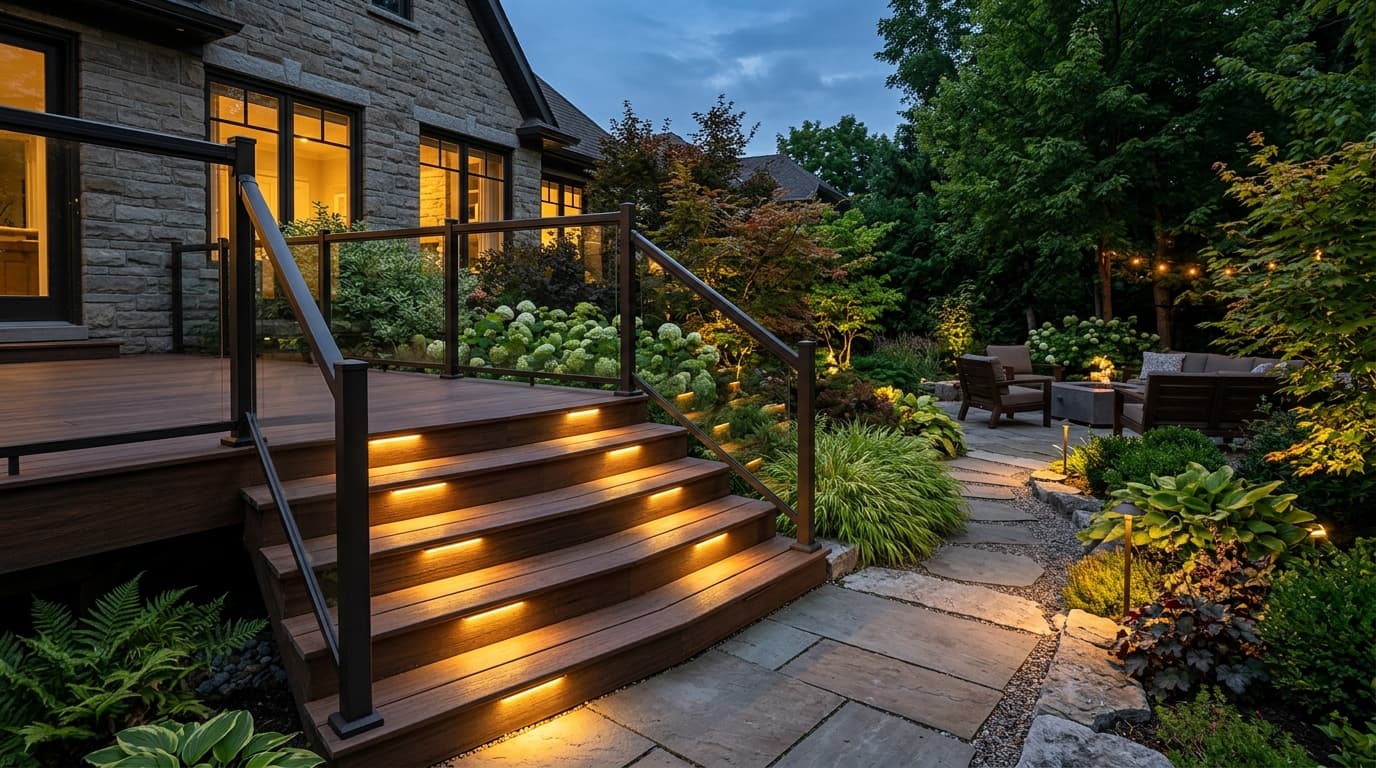
Deck and Step Lighting Ideas That Improve Safety Without Glare
13 min read
Outdoor step lighting is one of the clearest examples of lighting that earns its keep every night. The right fixtures make stairs and edges easier to read while also making the space look more finished.
The key is restraint. Step lights should guide movement, not blast light across the stairs, deck, or seating area.
The complete landscape lighting book covers the planning and wiring decisions behind this kind of project, including fixture placement, transformer sizing, voltage drop, and smart controls.
Quick answer
Good deck and step lighting starts with safe movement, then uses warm, shielded fixtures to make stairs and transitions feel finished without glare.
Light the change in elevation first
Steps, stair landings, and deck edges are the priority because they affect how safely people move through the space. If the budget is limited, start there before adding purely decorative accents.
A small amount of warm light placed correctly is usually more useful than a bright fixture in the wrong location.
Think about where a foot lands and where an edge could disappear at night. Those are the places that deserve attention before rail accents, planter lighting, or decorative uplights.
- Stair starts and top landings
- Any step that disappears into shadow from the main approach
- Deck-to-patio or deck-to-yard transitions
- Broad steps where people may walk side by side
Choose shielded fixtures whenever possible
Unshielded light at stair height can create glare right where people need visual comfort. Recessed, louvered, or downward-facing fixtures usually feel better and look cleaner.
The viewer should notice the step, not the bulb.
Shielding matters even more on decks because people sit close to the fixtures. A bare point of light that seems small in a product photo can become distracting when it is right beside a chair or stair landing.
Deeper reference
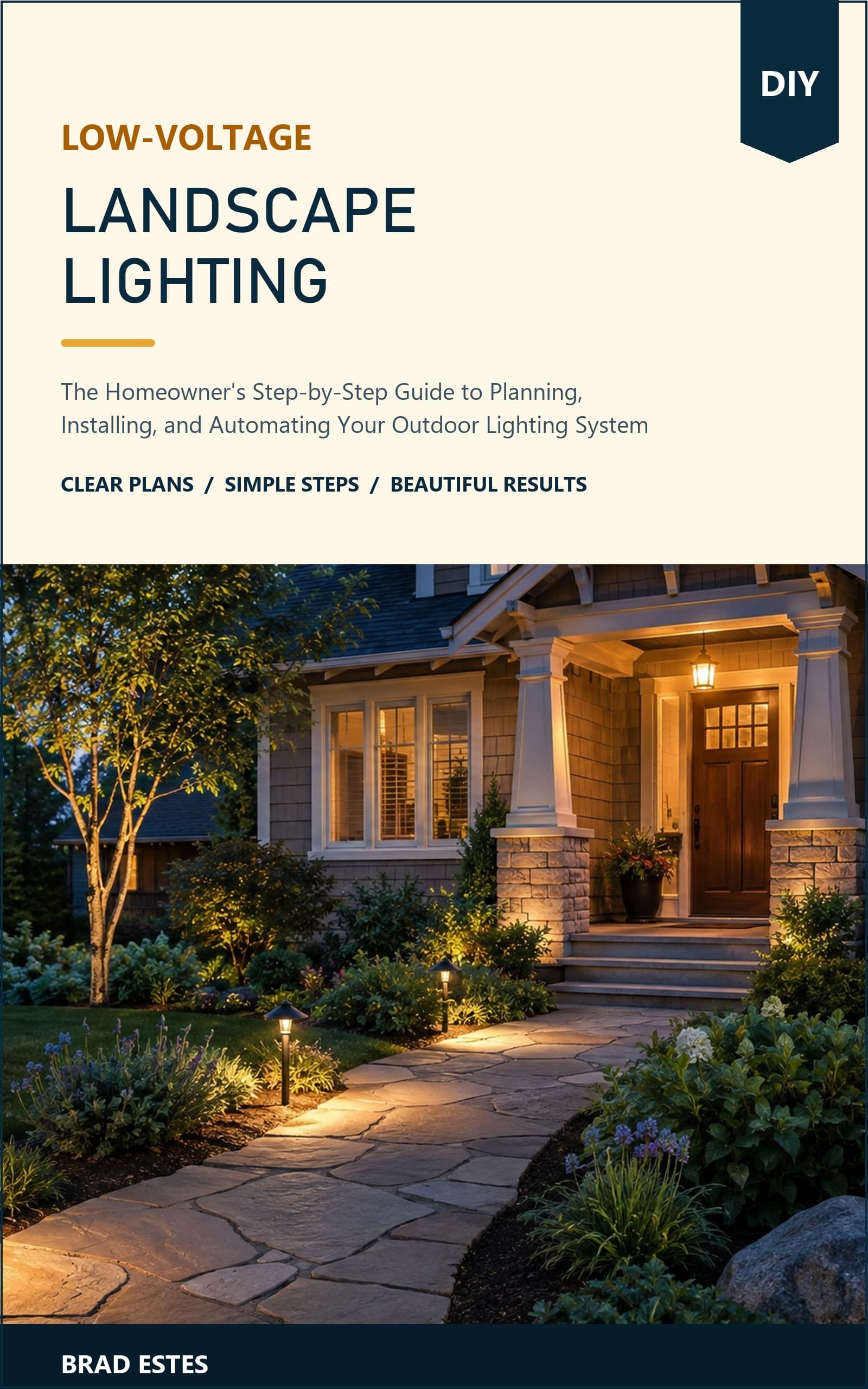
Keep the full homeowner guide on hand.
The book goes deeper on fixture selection, transformer sizing, wiring, voltage drop, automation, and building a landscape lighting plan from the first sketch through the final night look.
Use rail and post lighting carefully
Rail and post lights can make a deck feel polished, but they can also become busy if every post is lit. Use them to define the space and support movement rather than decorating every vertical surface.
A few well-placed rail lights near seating edges, stairs, or transitions can be enough.
If the deck already has sconces, string lights, or nearby patio lighting, keep rail lights subtle so the whole space does not feel visually crowded.
Think in step zones, not just fixture count
A short two-step transition at a back door does not need the same treatment as a broad front entry staircase or a multi-level backyard stair run. The right amount of light depends on how people actually use the steps.
Start by asking whether the goal is basic readability, stronger visual polish, or both. That usually tells you whether a simple riser-light approach is enough or whether the steps need support from nearby path, wall, or planting-bed light too.
This is also where homeowners often realize the steps are part of a bigger movement line through the yard, not a standalone feature.
Do not forget the transition into the yard
Many decks connect to paths, patios, lawns, or garden steps. If those transitions fall into darkness, the deck can feel disconnected from the rest of the outdoor space.
A few nearby accents can help the eye move naturally from the deck into the yard.
This is especially helpful when the deck sits above a patio or garden bed. Lighting the next destination makes the outdoor area feel like one connected space instead of separate bright and dark zones.
Keep the color temperature consistent
Deck lighting often gets mixed with porch lights, string lights, landscape fixtures, and outdoor sconces. If the colors fight each other, the result can feel messy.
For most homes, warm white fixtures in the same general range create a more intentional look.
Try to keep permanent deck and landscape fixtures close to each other in color temperature. Decorative string lights can be warmer, but the core system should feel like it belongs together.
Plan wiring access before choosing the final fixture layout
Deck and step lighting can become frustrating when fixture placement is decided without thinking about wiring access. Stairs, fascia boards, rail posts, and composite materials all affect how cleanly a system can be installed.
Before buying fixtures, identify where cable can be hidden, where connections will remain serviceable, and whether any deck boards or trim pieces need to be removed.
A beautiful fixture layout is not worth much if the wiring is exposed, impossible to service, or difficult to protect from weather.
Match the step-lighting plan to the electrical reality
Step lights are usually low wattage, but a staircase often lives on the same branch as nearby path lights, wall lights, or patio accents. That is how a small-looking project starts leaning on the transformer harder than expected.
If the steps sit far from the transformer or share a long run, check wire gauge and voltage drop before assuming every fixture will perform the same at the far end.
The visual question and the technical question belong together on this kind of project.
Next steps
If this page answered the first question, these are the next pages worth opening.
Outdoor Step Lighting Ideas Without Glare
Use the more step-focused page if your main question is how stairs should look and feel at night.
How to Add Lights to Outdoor Steps
Open the installation guide when you are moving from inspiration into fixture placement, wiring, and service access.
Landscape Lighting Transformer Planner
Check transformer size once the step-light count and nearby path or accent fixtures start becoming real load.