Technical / Buying Guidance
Landscape Lighting Voltage Drop Chart for Homeowners
8 min read
A voltage drop calculator is the right tool when you want a more exact answer. But sometimes you just want a fast chart that tells you whether a 12V run is probably comfortable, borderline, or asking for trouble.
This page gives you that first-pass reference so you can spot dimming risk early and make better cable and layout decisions before fixtures go in the ground.
Quick answer
A voltage drop chart helps you spot trouble early, but the real win comes from adjusting wire size and layout before weak fixtures show up in the yard.
Read the chart as a planning guide, not a guarantee
Voltage drop depends on more than one variable at the same time. Wire gauge, one-way run length, and connected watt load all push the number around together.
That means a chart works best as a screening tool. If you are anywhere near the risky side of the ranges below, move into the calculator and review the zone layout before buying cable.
- Shorter runs are naturally safer
- Heavier wire usually buys you more room
- Higher loads make long runs go bad faster
Quick voltage drop chart for common homeowner runs
These ranges assume a typical 12-volt low-voltage residential system and are meant to help homeowners spot when a run is likely to become borderline.
| Wire gauge | Run length | Typical connected load | Practical read |
|---|---|---|---|
| 12 AWG | Up to 50 ft | Up to 60W | Usually comfortable |
| 12 AWG | 50 to 100 ft | Up to 60W | Usually workable, but check layout |
| 12 AWG | 50 to 100 ft | 60W to 120W | Borderline enough to justify calculator review |
| 12 AWG | 100+ ft | 60W+ | Often risky without layout changes or heavier wire |
| 10 AWG | Up to 100 ft | Up to 120W | Usually stronger starting point |
| 10 AWG | 100 to 150 ft | Up to 120W | Often workable, but still calculator territory |
| 10 AWG | 150+ ft | 120W+ | Likely needs layout changes, branching, or tap strategy review |
This chart is intentionally simple. Real branching, tap settings, fixture sensitivity, and exact conductor specs still matter on longer or heavier runs.
What the chart is really trying to tell you
The goal is not to memorize perfect electrical cutoffs. It is to notice when the plan is getting too ambitious for the wire size and run length you are considering.
Most homeowner mistakes happen when too many fixtures are stacked onto one long path because the wire route looked simpler on paper than it behaves in the yard.
- A longer run plus small wire plus higher load is the classic trouble combination
- A run can be fine on wattage alone and still be weak because of distance
- Splitting a zone often solves more than oversizing hardware blindly
When to leave the chart and open the calculator
If your run lands near the borderline part of the chart, the next step is easy: use the calculator. That will give you a better estimate using your actual distance, load, and gauge choice.
Then compare that result with the wire gauge calculator and transformer planner so the whole system stays coordinated.
- Open the voltage drop calculator for exact run estimates
- Use the wire gauge calculator when 12 AWG vs 10 AWG is still unclear
- Use the transformer planner when the total zone load still feels rough
What to change first when the chart looks risky
A risky chart read does not automatically mean you need a bigger transformer. More often it means the run design is asking too much from the wire path.
The better fix usually comes from changing distance, load distribution, or cable size before you start buying larger hardware that still leaves the far end weak.
- Split one long heavy run into shorter branches when possible
- Move from 12 AWG to 10 AWG when distance and load keep stacking up
- Reduce the load on one branch before assuming the transformer rating is the main problem
Deeper reference
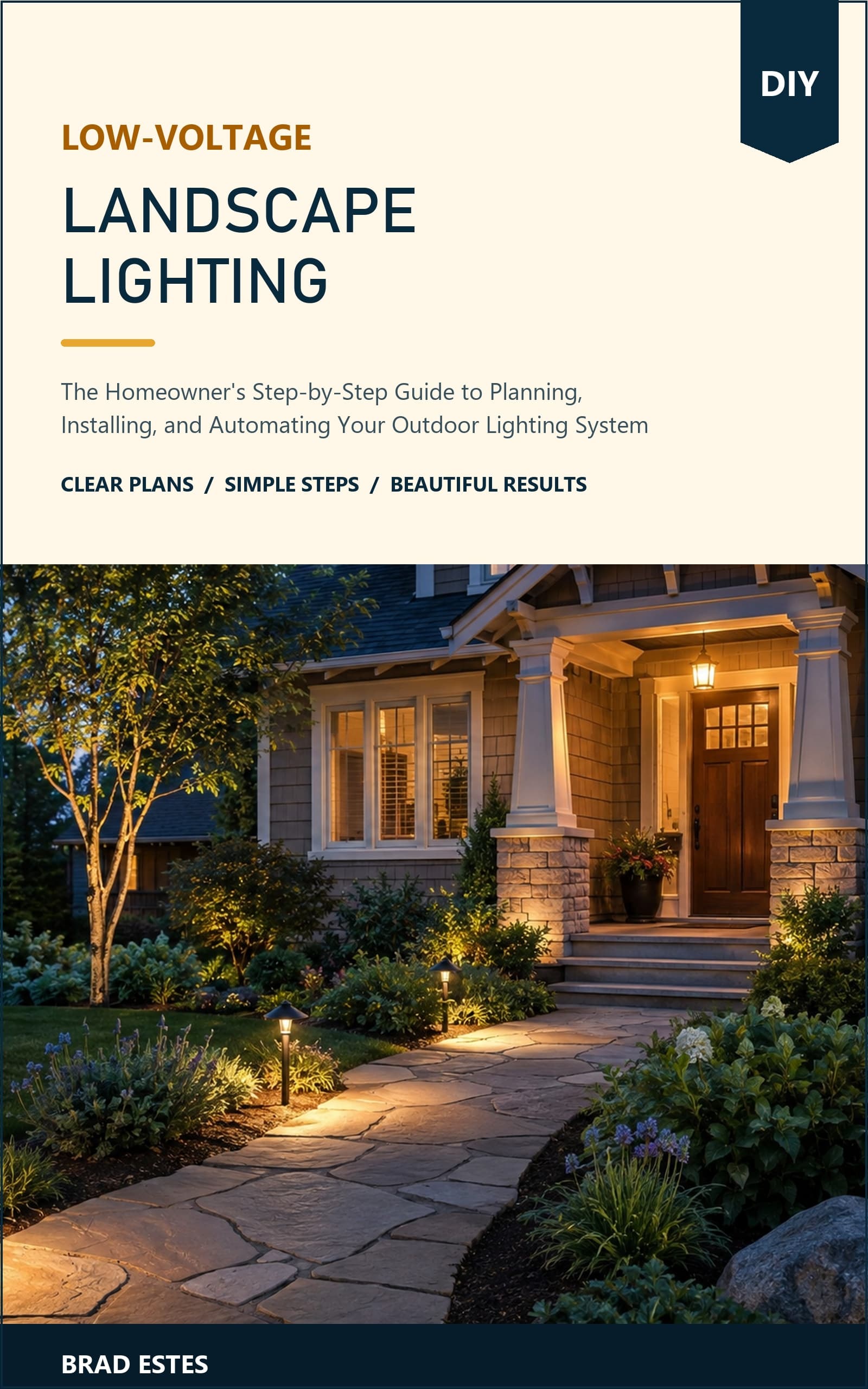
Keep the full homeowner guide on hand.
The book goes deeper on fixture selection, transformer sizing, wiring, voltage drop, automation, and building a landscape lighting plan from the first sketch through the final night look.
Next steps
If this page answered the first question, these are the next pages worth opening.
Landscape Lighting Voltage Drop Calculator
Use the calculator once the chart suggests the run may be pushing the limits on distance, load, or both.
Landscape Lighting Voltage Drop Explained for Homeowners
Read the full guide when you want the why behind dim far-end fixtures instead of just a quick chart read.
Landscape Lighting Wire Gauge Calculator
Compare 12 AWG vs 10 AWG next if the chart says the run is starting to get ambitious.
Frequently asked questions
How far can I run landscape lighting wire before voltage drop becomes a problem?
It depends on the wire gauge and the connected load. A short low-load run may be comfortable, while a longer run carrying more fixtures can become borderline quickly. That is why run length never tells the whole story by itself.
Is 12 gauge wire enough for most landscape lighting runs?
Often yes for shorter or lighter residential runs, but not always. Once the run gets longer or the load gets heavier, 10 AWG or a better zone layout may become the more realistic choice.
Should I use a chart or a calculator for voltage drop?
Use the chart for a fast first pass and the calculator when the run looks borderline, the load is meaningful, or you are deciding between cable sizes.
Can splitting the run help more than upsizing the transformer?
Very often yes. Splitting a long run into shorter branches or reworking the layout can solve voltage drop more directly than simply increasing transformer size.
Recommended products
Amazon picks that fit this guide
These are starter products tied to the decision this page is helping with. Use the guide's planning advice and the product specifications together before you buy.

SUNVIE 14/2 Low Voltage Landscape Wire, 100 FT
A sensible draft pick when the run is pushing past easy 12/2 territory and you want more protection against dimmer far-end fixtures.
View 14/2 wire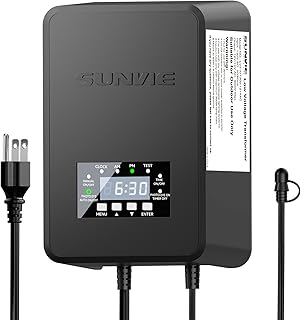
SUNVIE 200W Landscape Lighting Transformer with Timer and Photocell
A transformer option that fits many mid-size residential systems where load planning and wire-run quality both need to stay in the same conversation.
View 200W transformer
Gardner Bender GET-3202 Low Voltage Tester
A low-voltage tester that gives homeowners a simple way to confirm whether the far end of the run is still seeing healthy power.
View low-voltage testerDisclosure: As an Amazon Associate, this site may earn from qualifying purchases at no extra cost to you.