Planning & Layout
Landscape Lighting Layout Ideas for a Better-Looking Yard
10 min read
A lot of bad outdoor lighting starts with good intentions and no real layout. Homeowners buy fixtures first, then try to make them fit the yard afterward.
A better process is to sketch the layout first. Once you know the route, focal points, and zones, the fixture list gets easier and the final result usually looks more expensive.
Quick answer
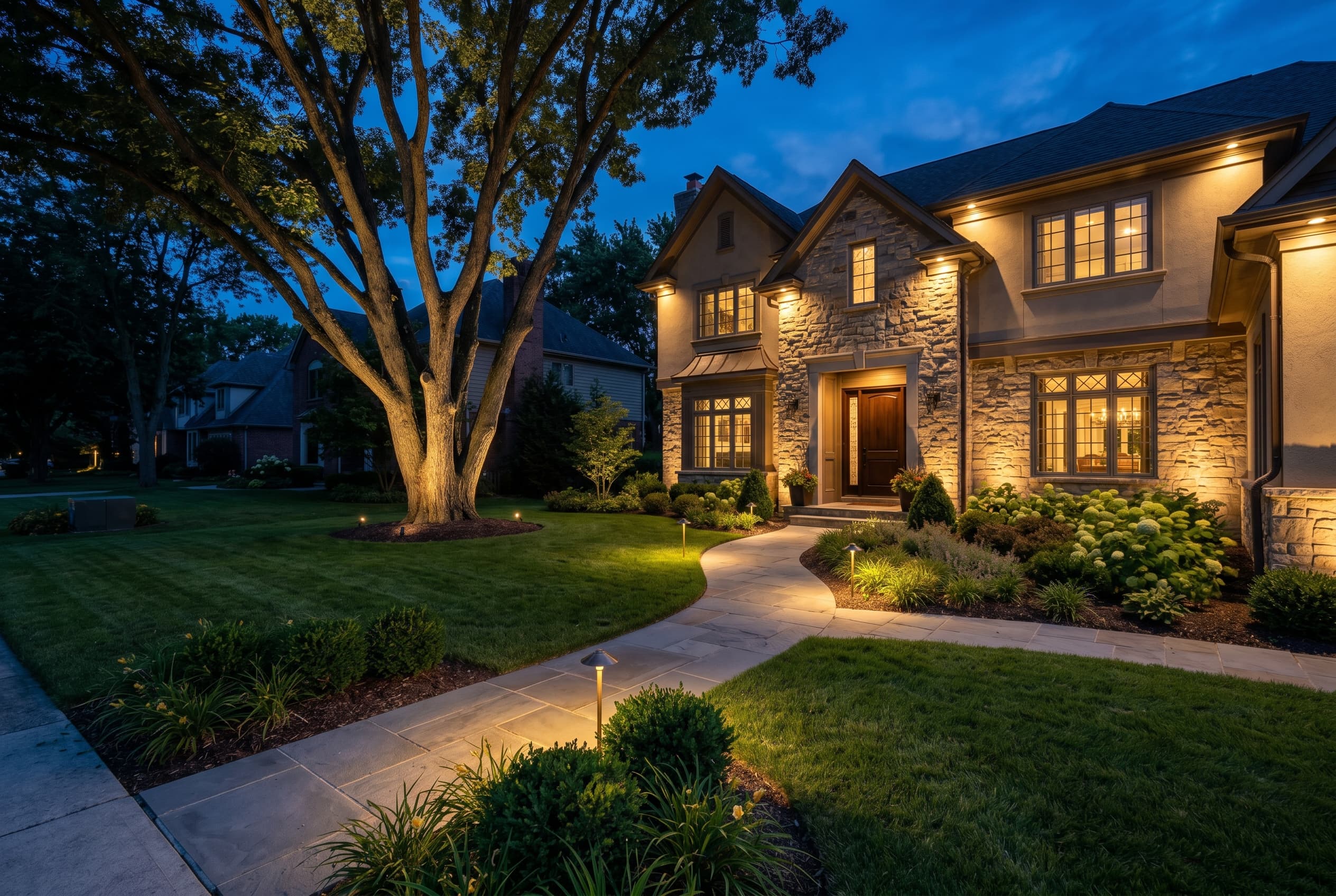
The best landscape lighting layout starts with paths, adds a few focal points, and breaks the yard into zones before the fixture shopping begins.
Start with the movement paths first
Most yards have a few obvious movement lines: front walk, driveway-to-door route, side path, patio transition, or steps into the backyard. Those paths matter because they affect safety and because they shape how the eye moves at night.
Start by deciding which of those routes need visual definition. You do not need to light every inch of them, but you do want the path to read clearly after dark.
Choose only a few focal points worth highlighting
Once the paths are defined, look for the features that deserve emphasis. That might be one mature tree, a stone wall, a front entry column, or a planting bed with real structure.
The layout works better when a few focal points carry the scene. If every shrub gets a spotlight, the whole yard starts to feel noisy instead of designed.
- One strong entry feature
- One or two trees or planting groups
- Important steps or elevation changes
- A patio edge or destination point deeper in the yard
Deeper reference
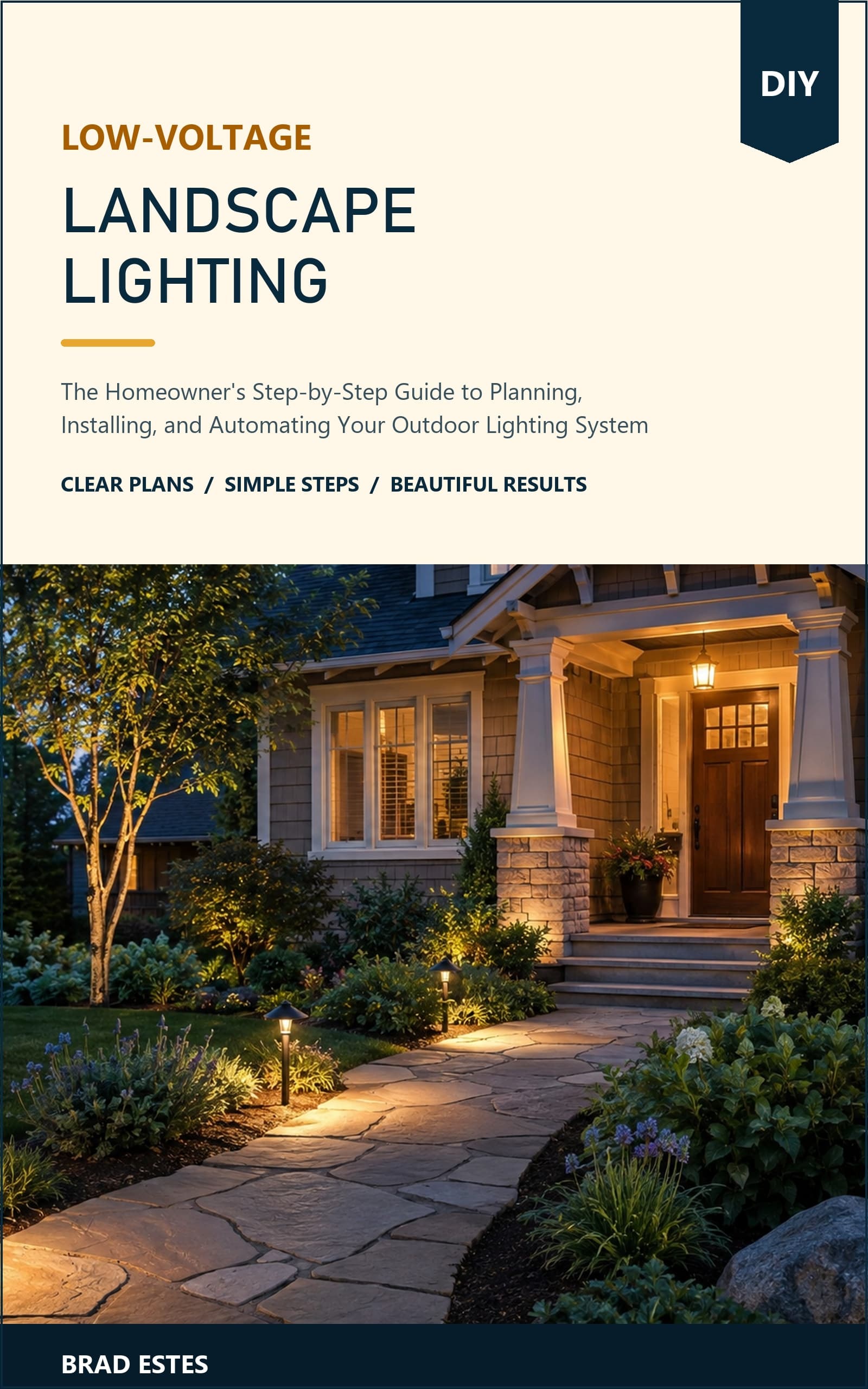
Keep the full homeowner guide on hand.
The book goes deeper on fixture selection, transformer sizing, wiring, voltage drop, automation, and building a landscape lighting plan from the first sketch through the final night look.
Break the system into real zones
Think about the front yard, side yard, backyard, and entertainment areas as separate zones even if one transformer powers more than one of them. That makes the layout easier to plan and much easier to troubleshoot later.
Zoning also helps you avoid the common mistake of one giant cable run that tries to do everything at once.
Use contrast instead of uniform brightness
Good lighting layout is about hierarchy. The eye should know what is most important, what is secondary, and what can stay quiet.
That means some areas will be darker than others, and that is fine. The goal is readability with depth, not flat uniform brightness from curb to fence line.
Plan wiring and transformer access while you sketch
A layout is not only about where the light lands. It also has to respect where cable can run cleanly and where the transformer will actually live.
If a focal point is so far away that it forces an ugly or overloaded run, the layout probably needs a cleaner zone break or a different fixture strategy.
Next steps
If this page answered the first question, these are the next pages worth opening.
Landscape Lighting Transformer Sizing Guide
Move from the sketch into load planning once the yard starts breaking into real zones.
Landscape Lighting Transformer Planner
Use the planner to turn the layout into realistic zone wattage, reserve capacity, and run-distance estimates.
How Many Landscape Lights Can You Put on One Transformer?
Open this next if the layout is getting dense and you want a clearer sense of what one transformer can handle comfortably.