Planning & Layout
Where to Place Landscape Lights Around Your Home
9 min read
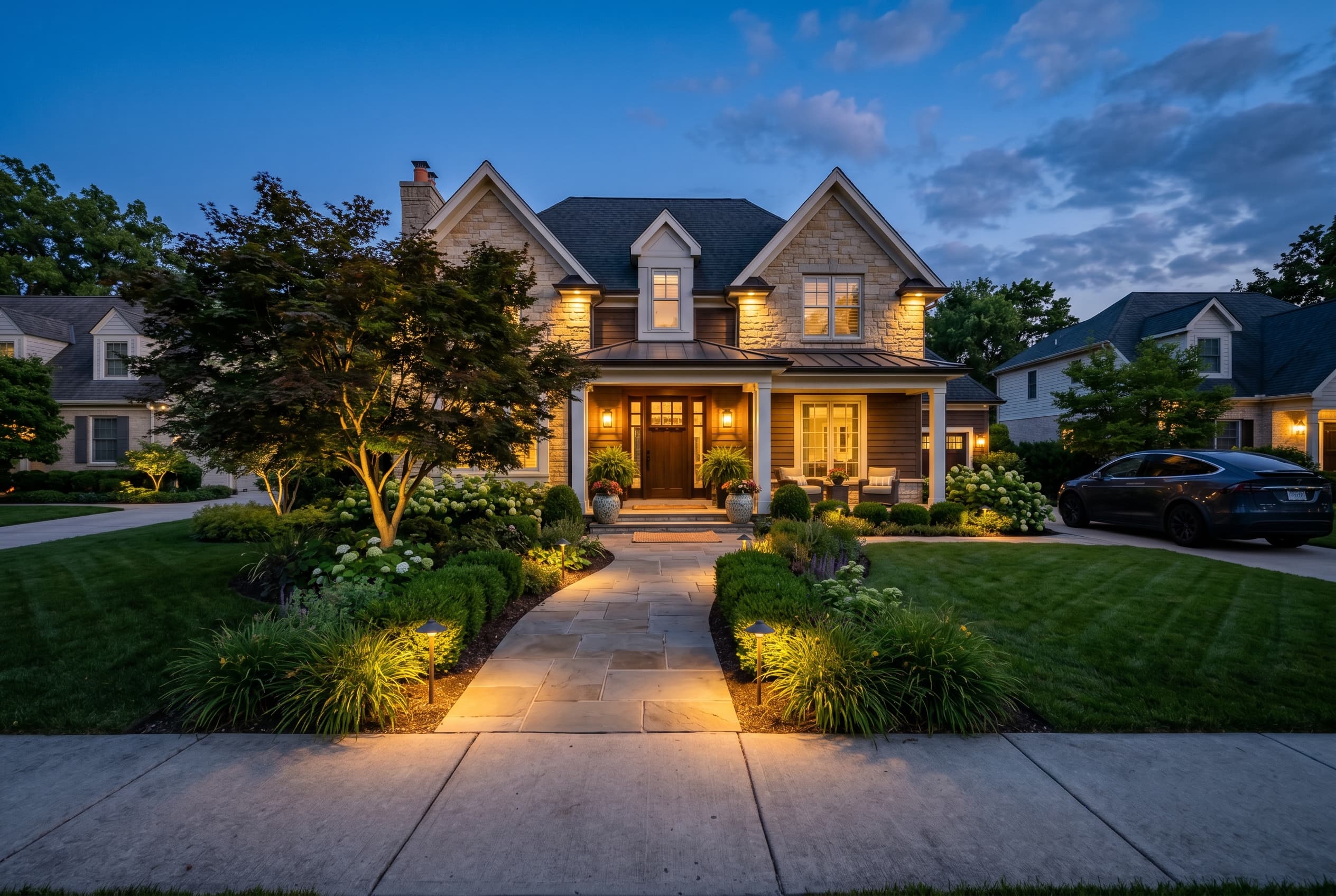
One of the most common homeowner questions is simple: where do the lights actually go? That question matters more than brand names or fixture finishes because placement does most of the visual work.
A few well-placed fixtures can look great. A yard full of poorly placed fixtures can still look awkward, bright, and confusing after dark.
Quick answer
Landscape lights belong at movement decisions, strong focal points, and destination areas — not evenly scattered across the yard.
Place path lights where people need guidance
Path lights belong where someone needs help reading the route: at walkway starts, turns, steps, and transitions. They do not need to line every inch of a straight segment.
This is the easiest way to keep the yard from looking like a runway while still making movement feel natural.
Use uplights at features with real shape or texture
Trees, layered planting groups, stonework, and columns are often better uplight candidates than small isolated shrubs. The feature should have enough presence to reward the attention.
Before placing an uplight, ask whether the element would still matter if the light were removed. If not, it may not deserve a dedicated fixture.
Deeper reference
Keep the full homeowner guide on hand.
The book goes deeper on fixture selection, transformer sizing, wiring, voltage drop, automation, and building a landscape lighting plan from the first sketch through the final night look.
Light the destination, not just the route
The front door, patio seating zone, stair landing, and gate are all destination points. They deserve emphasis because they tell the eye where the yard leads.
This is why a small amount of warm light at the door or patio edge usually adds more value than another random accent in the mulch bed.
Use a few background points to create depth
The yard looks larger when the eye has something to travel toward beyond the immediate foreground. A tree in the distance, a planting bed near the property edge, or a far corner transition can all help.
The point is not to light the entire perimeter. It is to avoid a scene where everything interesting stops ten feet from the house.
Check sightlines before committing to the final position
A fixture that seems fine on paper can create glare from the driveway, the porch, or a living room window. Placement should always be checked from the real viewing angles that matter.
If the fixture source is more noticeable than the effect, it is in the wrong place, aimed badly, or too bright for the scene.
Next steps
If this page answered the first question, these are the next pages worth opening.