Curb Appeal
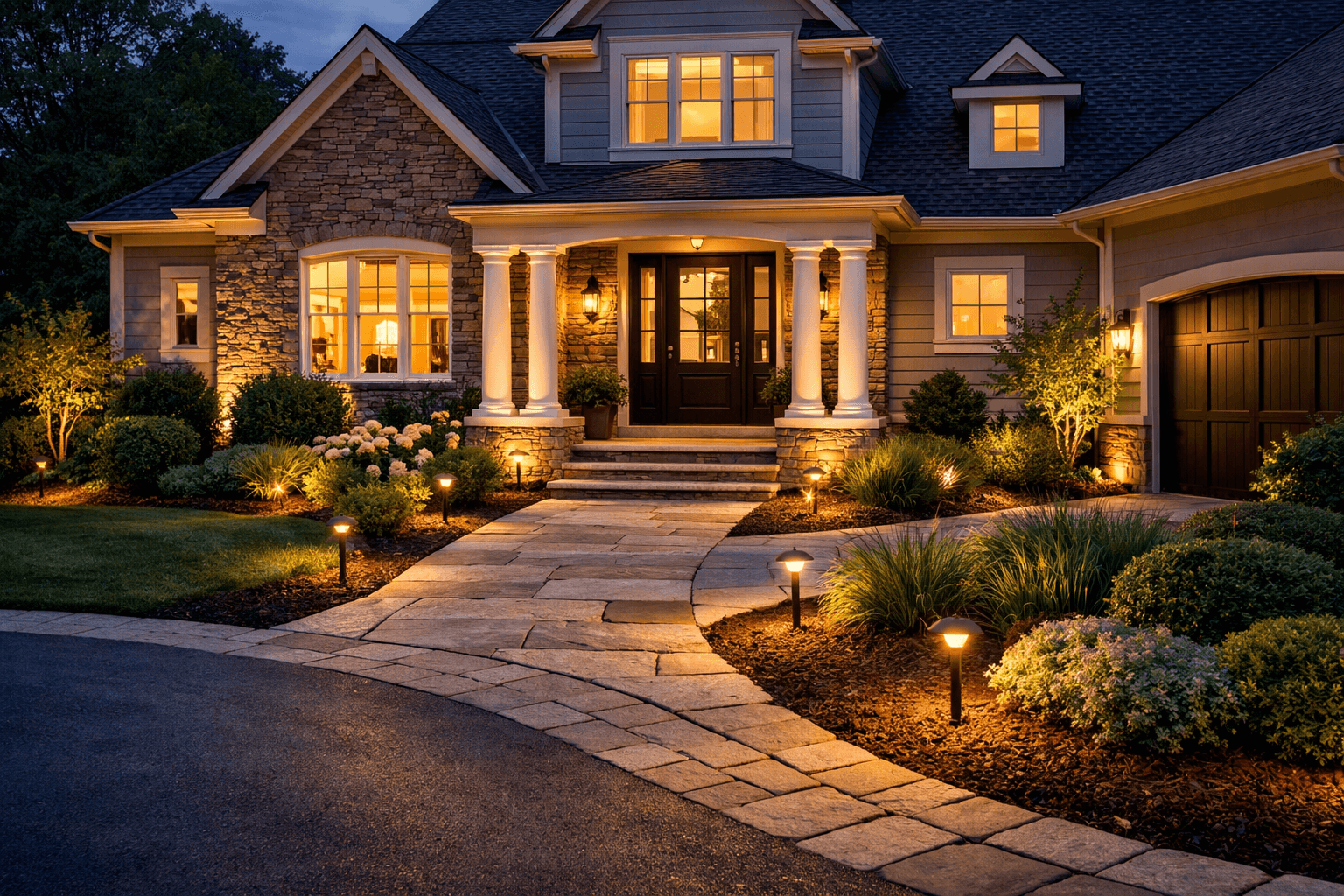
Driveway and Front Entry Lighting Ideas That Feel Welcoming
12 min read
The front entry is where landscape lighting has to do practical work and visual work at the same time. It should help people understand where to go while making the house feel polished from the street.
The mistake is trying to light everything equally. A better plan guides the eye from arrival point to front door with a few deliberate layers.
For a full homeowner walkthrough of fixture choices, transformer sizing, cable layout, and automation, the landscape lighting book goes deeper than a single idea article can.
Quick answer
Driveway and entry lighting works best when it quietly guides people from arrival point to front door while keeping the home warm and restrained from the street.
Treat the driveway as the beginning of the arrival sequence
Most guests experience the home in stages: driveway, walkway, porch, front door. Lighting should support that sequence rather than only decorating the planting beds.
A small amount of visual guidance near the driveway edge or walkway entrance can make the whole property feel easier to approach after dark.
The goal is not to outline the entire driveway like a runway. It is to make the transition from car to walkway feel obvious, safe, and intentional.
Make the front door the visual destination
The eye should understand where the entry is. That can come from porch lighting, soft architectural accents, or path lights that create a rhythm toward the door.
If the brightest element is a random shrub or garage wall, the lighting plan can feel confusing even if each fixture looks fine on its own.
A slightly brighter front-door zone, paired with restrained path lighting, often does more for curb appeal than lighting every plant along the foundation.
Deeper reference
Keep the full homeowner guide on hand.
The book goes deeper on fixture selection, transformer sizing, wiring, voltage drop, automation, and building a landscape lighting plan from the first sketch through the final night look.
Use path lights to mark decisions, not every inch
Driveway-to-door routes often include turns, curves, steps, and transitions. Those decision points deserve more attention than straight sections that are already obvious.
This approach usually looks cleaner and uses fewer fixtures than lighting both sides of every walkway segment.
When in doubt, place fixtures where a guest might hesitate: the beginning of the walk, a change in direction, a stair, a landing, or the final approach to the porch.
- Walkway starts
- Turns and curves
- Steps or elevation changes
- Porch and front-door transition
Balance safety with curb appeal
Safe lighting does not need to be cold or harsh. Warm, shielded fixtures can make the route readable while still preserving the softer look homeowners want.
The best front-entry lighting feels obvious to walk through and attractive to look at from the street.
Think of safety as readability. People need to see edges, steps, and destination points. They do not need the whole yard lit to daytime brightness.
Use architecture and planting beds together
A front entry usually looks best when the lighting includes both hard surfaces and soft landscape elements. A little light on stone, brick, columns, or a textured wall can make the home feel more substantial.
Planting beds add depth and softness. Use them to frame the approach instead of competing with the front door.
This mix is what makes a front yard feel designed: architecture gives structure, planting beds give depth, and the path lighting connects the sequence.
Avoid glare from the street and from inside the home
Front-yard fixtures are visible from more angles than backyard fixtures. A spotlight that looks fine from the walkway may glare into the street, a neighbor’s window, or the homeowner’s own living room.
After installing or aiming fixtures, check the view from the curb, the driveway, the porch, and the main front windows.
If you see the source more than the effect, use a shield, adjust the angle, lower the output, or choose a fixture with better optical control.
Next steps
If this page answered the first question, these are the next pages worth opening.